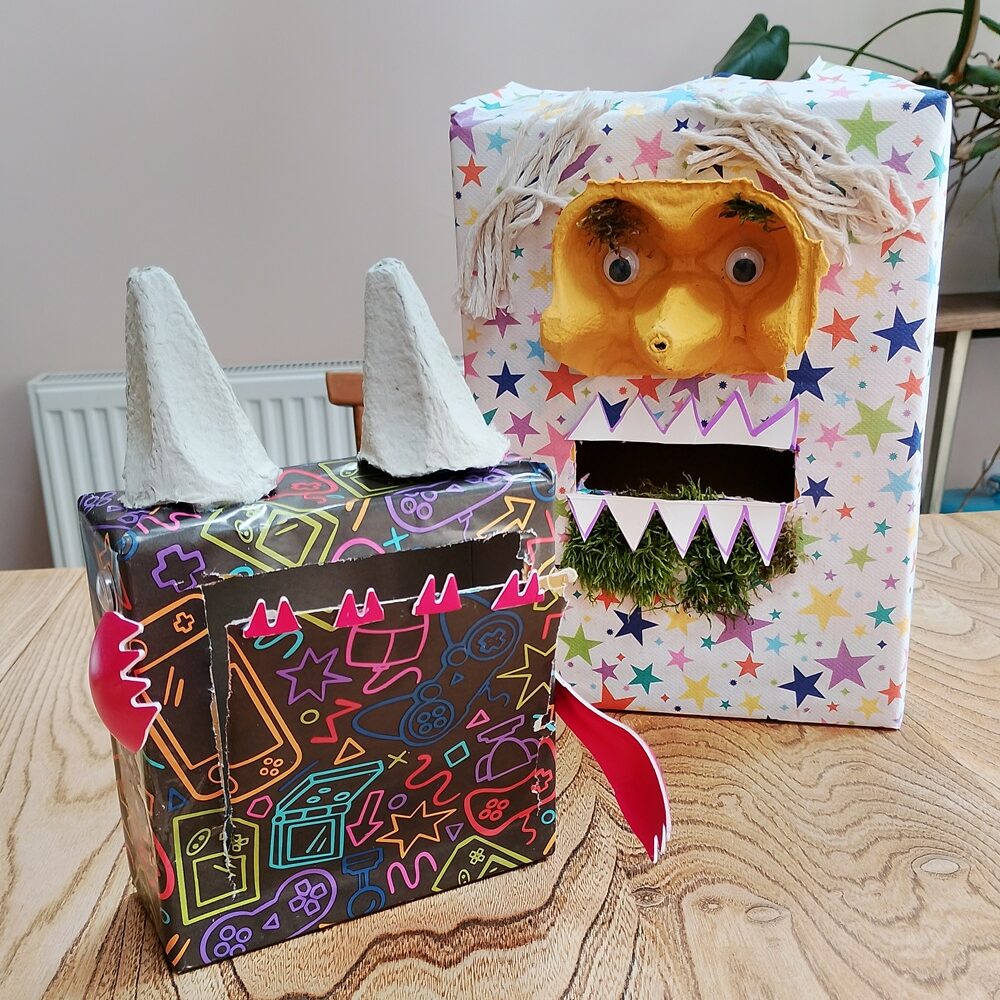
If your child has worries stuck in their head, a worry monster can be a simple, creative way to help them share what’s on their mind. It gives them somewhere to put their concerns, so they don’t have to carry them with them.
What is a worry monster?
A worry monster is a simple tool that encourages children to write or draw their worries and post them somewhere safe. Some children may want to talk about what they put inside, while others may simply find it helpful to get the worry out of their head and leave it there.
You can buy cuddly worry monsters, but making one together can be a fun activity in itself. It also gives your child the chance to make something that feels personal, comforting and completely their own.
Watch our step-by-step video below to see how to make your own worry monster at home.
How can a worry monster help children manage worries?

A worry monster may help children express anxious thoughts and everyday worries. It’s not a replacement for professional support, but it can help children to offload and give them a choice about whether they want to talk things through.
Worries can feel overwhelming, no matter what age you are. A worry about a friendship, a test at school, sleeping alone, moving house or a change at home can quickly grow and start to affect how a child feels.
Writing or drawing a worry can help children slow down and notice what is bothering them. Sometimes worries are mixed up with big feelings, making them difficult to explain. Putting a worry onto paper gives it a shape and can make it easier to share. For younger or neurodivergent children, drawing a picture may feel easier than finding the right words.
Posting a worry into the monster can also feel comforting. The worry doesn’t disappear, but it can help a child feel less alone with it. For some children, this may lead to a conversation with a trusted adult. For others, the benefit may simply be having somewhere safe to put the worry.
Using a worry monster can also help children understand that thoughts and feelings are connected, but not always the same thing. For example, a child might think, “Nobody likes me.” That thought might lead to feelings of sadness, anxiety or loneliness. If they choose to talk about it, you can help them explore what happened and whether the thought is really true – often, thoughts are just thoughts, and not facts at all. You can then talk about what might help them feel better.
Over time, this can help children become more confident in recognising worries, naming emotions and asking for support when they need it.
How to make a worry monster
What you’ll need
- An empty box, such as a tissue box, cereal box or small cardboard box
- Tissue paper, wrapping paper or coloured paper
- White paper for teeth
- Scissors
- Tape or glue
- Things to use as decoration, such as googly eyes, stickers, pom poms, ribbon, pipe cleaners, paint, pens, or dry leaves, twigs and other natural items you’ve found
1. Create a mouth
Carefully cut an opening into the box to make your monster’s mouth. This is where your child will feed their worries. You may need to do this part or help your child with it.
If you’re using a tissue box, you can use the opening the tissues come out of. If you’re using a different box, make sure you tape the flaps closed when you’ve made the mouth.
2. Cover the box
Wrap the box in tissue paper, wrapping paper or coloured paper and secure it with tape or glue. Make sure the mouth opening stays clear. Alternatively, you could wrap the box before cutting the mouth hole – whatever is easiest with the box you’re using.
3. Add teeth
Cut teeth shapes from white paper and stick them around the edge of the mouth. This is another step that your child might need some help with.
4. Decorate your monster
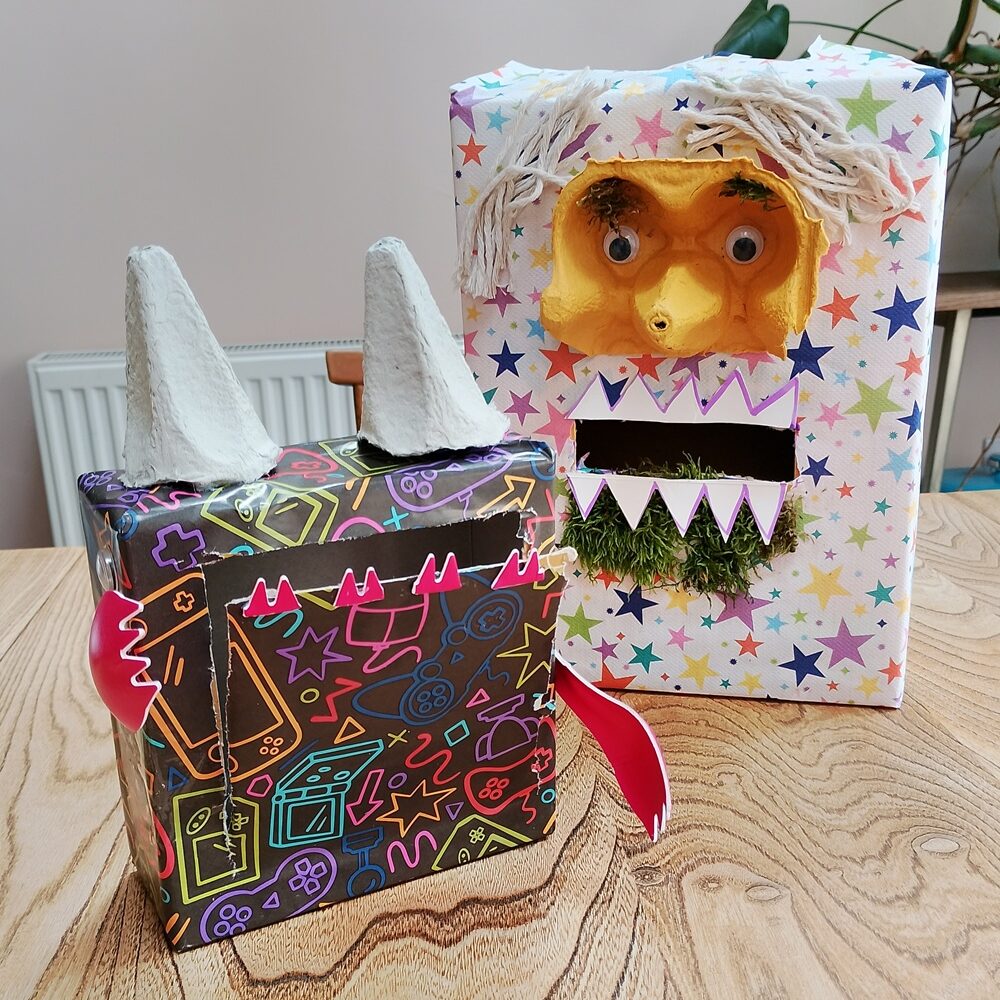
Now it’s time for your child to decorate their monster however they choose. They might add eyes, ears (the individual cups in an egg box make great ears), horns, hair or any other decorations they like.
Their monster can look funny, friendly, colourful or silly. Let your child’s imagination lead the way, and be there to help with any tricky bits.
5. Feed the monster your worries
When your child has a worry, they can write or draw it on a piece of paper and pop it in the monster’s mouth.
You could use different coloured paper to show how big a worry feels:
- green for small worries
- yellow for medium worries
- red for big worries
This can help your child notice how big a worry feels and, if they want to, use it as a starting point for a conversation.
How to use a worry monster with your child
A worry monster works best when children know support is available, without feeling pressured to share every worry they put inside. You might agree a regular time to check in with your child and ask whether there is anything in the worry monster they would like to talk about. Try to do this well before bedtime, so worries aren’t fresh in your child’s head again just as they try to go to sleep.
Your child may want to keep their worry monster somewhere visible as a reminder that support is available. Others may prefer to keep it somewhere private. Let your child decide what feels right for them.
Some children may want to talk about every worry they put inside their monster, while others may not want to share them at all. Try not to pressure your child to discuss their worries. Instead, let them know support is available whenever they are ready to talk.
If your child chooses to share a worry, try to listen without rushing to fix everything straight away.
What should I do when my child shares a worry?
If your child chooses to share a worry, try to listen without rushing to fix everything straight away. Sometimes children simply need to feel heard and understood before they are ready to think about solutions.
- Listen first: Give your child time to explain the worry in their own way.
- Name the feeling: You might say, “That sounds like it felt scary,” or “I can see why that bothered you.”
- Check what they need: Ask whether they want help solving the problem or whether they just want you to listen.
- Think of small next steps: If they are ready, help them choose one simple thing they could try.
- Keep checking in: Some worries take time, so let your child know they can come back to it again.
Alternative ideas to a worry monster
Different children prefer different ways of expressing themselves. If a worry monster doesn’t feel right for your child, there are other things that can help them share worries in a way that feels more comfortable to them.
A worry journal
A worry journal is a notebook where your child or young person can write, draw or stick pictures that represent their worries. Your child might like to keep their journal somewhere private, such as under their pillow or in a drawer, and choose when they would like to share it.
Older children and teenagers might prefer this, so they can record worries privately before choosing whether to share them.

Worry dolls
Worry dolls come from a traditional Guatemalan story. It is said that when children are worried, they tell their worries to the dolls and place them under their pillow before going to sleep. The story says that by morning the dolls have taken the worries away.
In reality, offloading a concern to the doll can help to lessen the burden of the worry, in much the same way as a worry monster might. This can help children feel calmer and ready to face a new day.
Children can find sharing worries with a doll easier than talking about them directly.
A worry box
Instead of creating a monster, your child could decorate a simple worry box. The idea is similar: your child can place worries inside and decide whether they want to share any of them later.
When to seek additional support
A worry monster can be a helpful way to talk about everyday worries and feelings. However, some worries may need extra support.
Consider speaking to your child’s school, GP or a mental health professional if worries are regularly affecting your child’s:
- sleep
- school attendance or learning
- friendships and relationships
- confidence
- day-to-day activities.
You know your child best. If you’re concerned about their emotional wellbeing, it’s always okay to ask for help.

Call, text, email or web chat FamilyLine
If you’re feeling overwhelmed, worried or upset about any aspect of your family life, FamilyLine is here for you. We offer free emotional support and guidance on family relationships, conflict, parenting, caring, financial worries and more.
Contact FamilyLine