
When a child is not able to live with their parents, it’s often family members or trusted adults who step in to help. This might be a grandparent, aunt, uncle, older sibling or someone else close to the child. If you’re caring for a child in this way, you may have come across terms like kinship care, special guardianship and adoption, and wondered what the differences are – and what rights and responsibilities come with each option.
This guide explains these arrangements so you can understand the basics and find the right support when you need it.
In this article:
- What is parental responsibility (PR)?
- What is kinship care?
- Informal kinship care (including private foster care)
- Formal kinship care (including kinship foster care)
- Understanding support for kinship carers
- What is special guardianship (SG)?
- Parental responsibility for special guardians
- Support for special guardians
- What is adoption?
- Where to find support
What is parental responsibility (PR)?

Before we get into the different arrangements for looking after children who aren’t living with their birth parents, it’s important to understand what parental responsibility is (also sometimes known as parental rights). In short, it refers to the legal rights and duties a parent has in relation to their child, including decisions about education, health, and welfare.
In England and Wales, all birth mothers have parental responsibility (PR), and fathers usually do if they’re married to the birth mother or named on the child’s birth certificate. In other situations, PR is granted by a court order. Some of the crucial differences for the different arrangements discussed in this article relate to PR and whether the carer has it or not.
For more information on PR, including the rules for unmarried fathers, same-sex parents, and in Scotland and Northern Ireland, see the GOV.UK page on Parental rights and responsibilities.
What is kinship care?
Kinship care is actually an umbrella term that covers a wide range of situations, and all arrangements listed below other than adoption fall into this category.
Put most simply, it refers to a child who is being cared for by someone who isn’t their parent – usually a family member, but sometimes a close family friend.
Informal kinship care
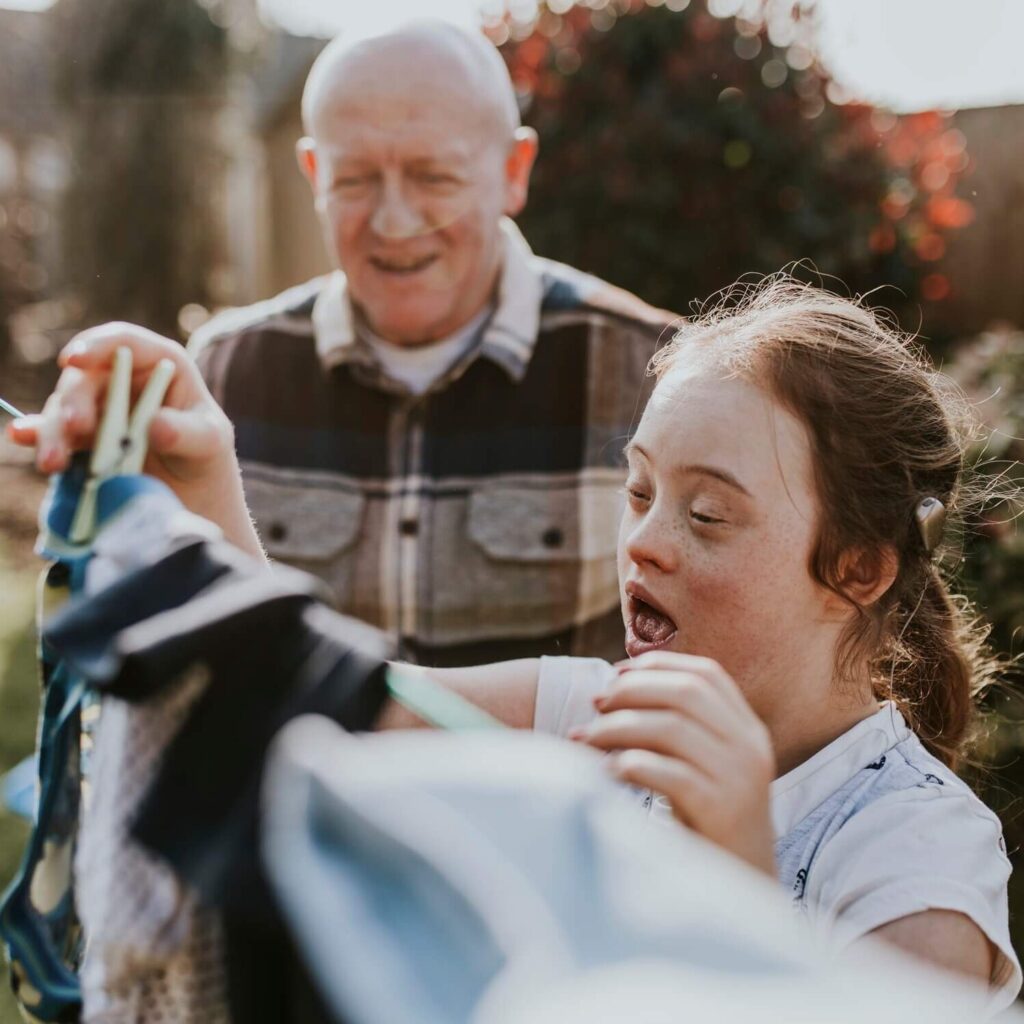
This is a private arrangement made within the family, and the local authority may not even be aware of the arrangement.
In this situation, carers do not have PR, meaning they can’t make some of those formal decisions, but they can take reasonable action to safeguard the child.
Informal kinship care can offer stability for a child, but many carers miss out on advice, support and financial help because they’re outside the formal system. Some kinship carers also worry about contacting their council for support, as they worry it might trigger unwanted involvement from the local authority.
Private foster care
This is a type of informal kinship care and applies when a child is cared for by someone who is not a close relative (for example, a family friend) for more than 28 days. It’s arranged privately, between the family and friends, but in this situation, the local authority must be notified.
Carers do not have PR, and support from the local authority varies, so if you’re in this situation it’s worth checking with your local authority to see what’s available to you.
Formal kinship care
Formal kinship care involves a legal order made by the court. A common example is the Child Arrangements Order (CAO), which sets out where a child should live. You may have heard of this in the context of a child custody arrangement between parents who have separated.
A CAO lasts until the child turns 18 (unless it’s ended by the court) and it gives the carer shared parental responsibility with the child’s birth parents. As with an informal kinship arrangement, there is no special support linked to a CAO.
Kinship foster care
Sometimes during care proceedings, a child is placed with a relative or friend who is temporarily approved as a foster carer. The crucial difference between this and private foster care (above) is that with kinship foster care, the local authority has made the decision. It’s also known as ‘connected persons fostering’ or ‘family and friends fostering’.
In this situation, the local authority holds PR, not the carer, and there will be an assessment before the child is placed with the foster carer. A foster care agreement and placement plan sets out both the carer’s responsibilities and the support they’ll get from the local authority.
This type of arrangement might be used while assessments are completed or when the local authority is deciding whether special guardianship might be appropriate long‑term.
Understanding support for kinship carers
It can be difficult to understand what support is available for kinship carers. Support varies depending on both the type of kinship care arrangement and where in the country you are.
Informal kinship carers often receive little or no support unless they approach their local authority, because often in this situation the local authority isn’t even aware of the arrangement.
Some councils may have what is known as a kinship local offer, which is a page on their website explaining the support available in that area. Not all local authorities have this, but searching for ‘kinship local offer’ along with your area is a good place to start.
What is special guardianship (SG)?
A Special Guardianship Order (SGO) is a legal order that gives one or more adults (often relatives, but not always) parental responsibility for a child until they turn 18. To become a special guardian, you must go through a full assessment by the local authority. This assessment cannot be skipped or completed by another service.
Special guardianship is used when a child cannot live with their parents and provides long‑term stability while keeping the child’s legal and family connections. Unlike adoption, the child usually keeps their original surname and identity.
Parental responsibility for special guardians
Special guardians have PR, but it’s shared with the child’s birth parents. However, special guardians have a stronger legal position, meaning they can usually make decisions alone.
There are a few decisions that still require birth parent agreement, including:
- changing the child’s surname
- taking the child abroad for more than 3 months
- certain non‑medical surgical procedures, such as circumcision.

Support for special guardians
Your local authority will provide some support for special guardians, but exactly what this looks like may vary between councils.
If the child was ‘looked after’ by the local authority before the SGO was made, the local authority must assess your support needs.
You may be entitled to some financial support too, since there’s a discretionary, means-tested special guardianship order allowance available from children’s services. There’s also the adoption and special guardianship support fund. Additionally, you can use this benefits checker to see what other support you might be entitled to.
Many special guardians are unaware of what support they’re entitled to, so it’s definitely worth checking with your local authority if you’re unsure.
What is adoption?
Adoption is the most permanent legal arrangement for a child who cannot live with their parents, and it lasts for life. PR transfers fully to the child’s adoptive parents, and the child’s surname usually changes too. Legal ties to the birth family are permanently severed, although contact may sometimes be arranged.
Adoption is usually treated as a last resort, when other options for living with family or other trusted adults are unsuitable.
Where to find support
Every family’s situation is different, and local authority support can vary. More guidance – including clearer local offers – is expected in the future.
If you need more support or have questions about your situation, you don’t have to figure things out alone. Contact the PAC-UK advice line by phone (0300 1800 090) or email ([email protected]). The advice line can:
- help you understand which arrangement applies to your situation
- explain possible next steps
- signpost you to local support
- help you check whether your council has a kinship local offer.
We know some kinship carers feel nervous about contacting their council directly. If you’re unsure, our helpline can help you understand what to expect and where to begin.
Finally, you may find the following useful:
Call, text, email or web chat FamilyLine
If you’re feeling overwhelmed, worried or upset about any aspect of your family life, FamilyLine is here for you. We offer free emotional support and guidance on family relationships, conflict, parenting, caring, financial worries and more.
Contact FamilyLine