Getting your family ready and out of the house on time on a school morning can be tricky. Everyone’s morning routine will look different depending on how many children you have, how old they are, how many schools they go to and how they get there, and what else needs to happen in the morning.
A few straightforward habits can make the start of the day feel calmer and more manageable, and that’s what we’re covering in this article. The aim is not to create a perfect morning – it’s to reduce the number of decisions, surprises and last-minute problems that can add stress for both children and adults.
Here are some steps you can take to help make your mornings as smooth as possible.
Prepare what you can the night before
Anything you can sort out the evening before is one less thing to think about in the morning. This might include:
- packing school bags
- finding shoes
- checking PE kits
- preparing lunchboxes
- putting coats and bags in the same place by the door.
It can also help to talk through what needs to happen the next day. This is especially true if something different from usual is happening, such as a school trip, club, appointment or a change in who is doing the school run.

Keep wake-up and bedtime routines consistent
A regular wake-up time can make mornings feel more predictable, but this is much easier when children are getting enough sleep. A calm, consistent bedtime routine helps children wind down and makes it easier to get up the next morning.
Screens can make it harder for children to settle, so aim for a screen-free hour before bedtime. You could make this a family agreement, for example: “Screens go away one hour before bed,” with phones and tablets left outside bedrooms overnight.
Try replacing screen time before bed with calmer activities such as reading, colouring, puzzles, having a bath, listening to a story or music. Keeping the routine consistent helps children know what to expect and reduces the chance of bedtime drifting later.
Use a simple morning checklist
A checklist can help children understand what needs to happen each morning. You could write it on a whiteboard, print it out, or use pictures for younger children.
Your checklist might include:
- getting dressed
- having breakfast
- washing face and brushing teeth
- brushing hair
- using the toilet before leaving
- packing or collecting their lunchbox
- putting on shoes and coat
- picking up their school bag.
For older children, the checklist may become more about reminders than direct instructions. For younger children, you may need to go through it with them several times until the routine becomes familiar.
Some children, including children with additional needs or those who find changes difficult, may need extra support to follow a morning routine. Visual prompts, simple step-by-step instructions, or more time to move between tasks can make the routine easier to manage.
You may also feel your child “should” be able to do something because they’re a certain age, or because it’s something they do every day – or even feel a bit guilty for thinking that way. Many neurodivergent children, particularly those that struggle with task initiation, may need extra support. Every child is different, and the most important thing is that you do what’s best for your child to get your morning off to a smooth start.
Encourage independence in small steps
Children need different levels of support depending on their age, confidence and needs. Younger children may need help with most parts of getting ready, while older children may be able to take on more by themselves.
You can encourage independence by giving them one or two manageable tasks to take responsibility for, such as putting their book bag by the door or choosing between two breakfast options. As they get used to these tasks, you can build from there.
Transitions can be hard in the morning, especially when children need to stop one activity and start another. Giving short warnings, such as “five minutes until shoes on” or “after getting dressed, it’s time to brush your hair”, can help children know what is coming next.
Keep breakfast simple
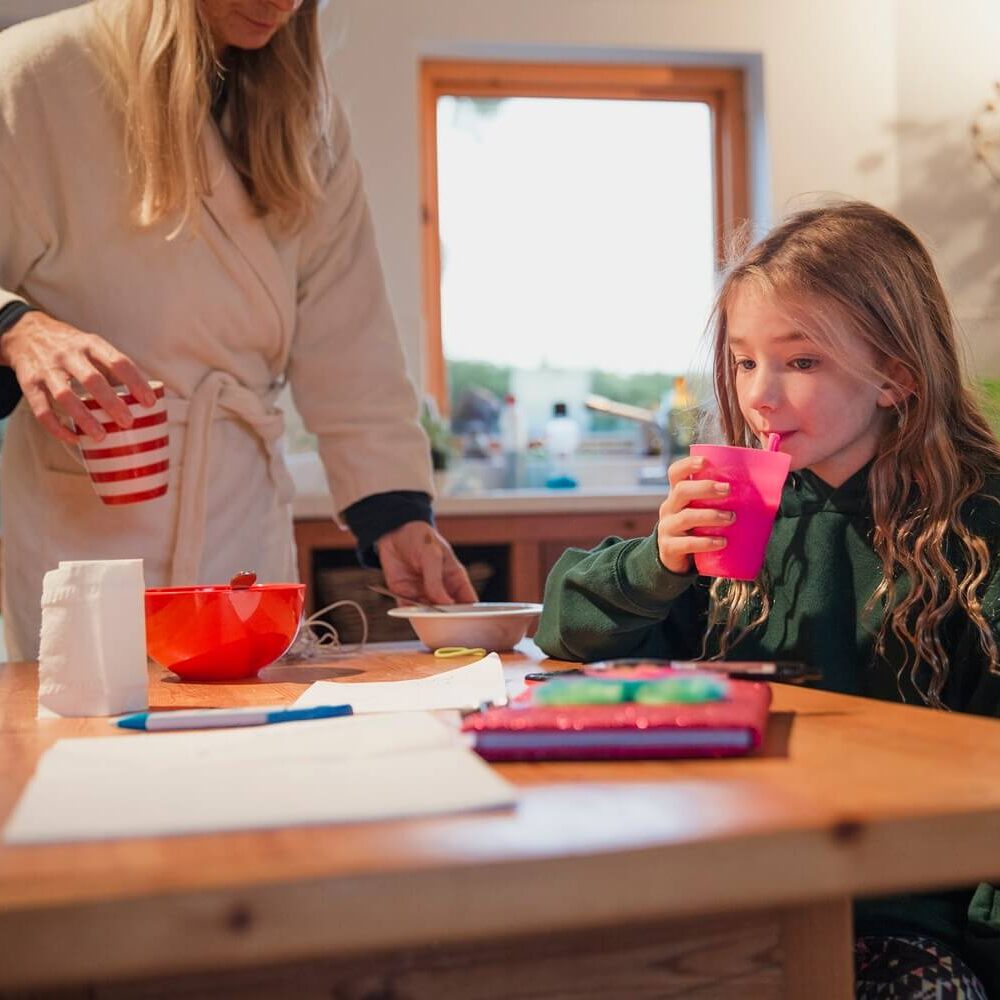
Planning breakfast options ahead of time can make the morning easier. Quick and simple options, or food that can be prepared the night before, can help when time is tight.
Some families find it helpful to have a short list of breakfast choices that children know they can pick from. Too many options can slow things down, so it may be easier to offer one or two clear choices, such as “toast or cereal?” rather than asking an open-ended question like “what would you like for breakfast?” This can reduce arguments and decision-making when everyone is still waking up.
Consider avoiding screens before school
For many children, screens can make it harder to stay on track. If TV, tablets or phones often lead to delays or disagreements, it may help to keep mornings screen-free until everyone is ready to leave.
If you do allow screen time, make the boundaries clear. For example, your child might only watch something once they’re dressed, have eaten breakfast and have their bag ready.
Build in a small time buffer
Even with a good routine, unexpected things can happen. Someone may spill breakfast, lose a shoe, remember a form, or need extra reassurance before leaving. If you can, aim to be ready a few minutes earlier than you need to be.
This small buffer can reduce the pressure on everyone and make it easier to respond calmly if something doesn’t go to plan.

Make time for connection if you can
A calm moment with your child can help set the tone for the day. It doesn’t have to be a long conversation – it might be:
- sitting with them while they eat breakfast
- giving a big hug before leaving
- saying something encouraging as you walk to school.
Some mornings will still feel rushed, and that’s normal. If a morning has been difficult, try to reset rather than seeing it as a failure. You can always talk later about what might make tomorrow easier.
Remember: your morning routine can change
When you’re starting to build a morning routine, you don’t need to change everything at once. It can help to choose one small thing to try first, such as preparing bags the night before, using a checklist or keeping screens off before school. Once that feels manageable, you can build from there.
What works one term may not work forever. Your child may need more independence, more reminders, or a different structure as they get older. It’s fine to review the routine and adjust it when you need to.
The most useful morning routine is one that fits your family, is easy to understand, and helps everyone leave the house feeling as settled and prepared for the day as possible.
Call, text, email or web chat FamilyLine
If you’re feeling overwhelmed, worried or upset about any aspect of your family life, FamilyLine is here for you. We offer free emotional support and guidance on family relationships, conflict, parenting, caring, financial worries and more.
Contact FamilyLine