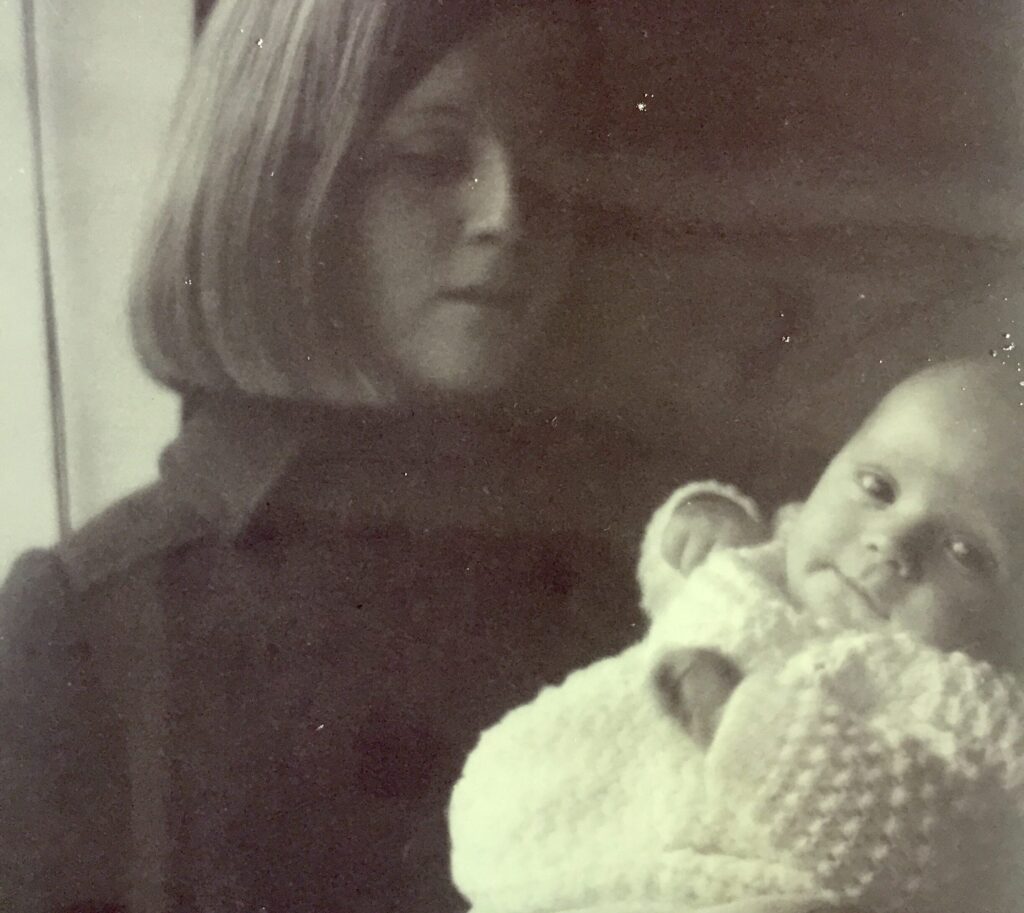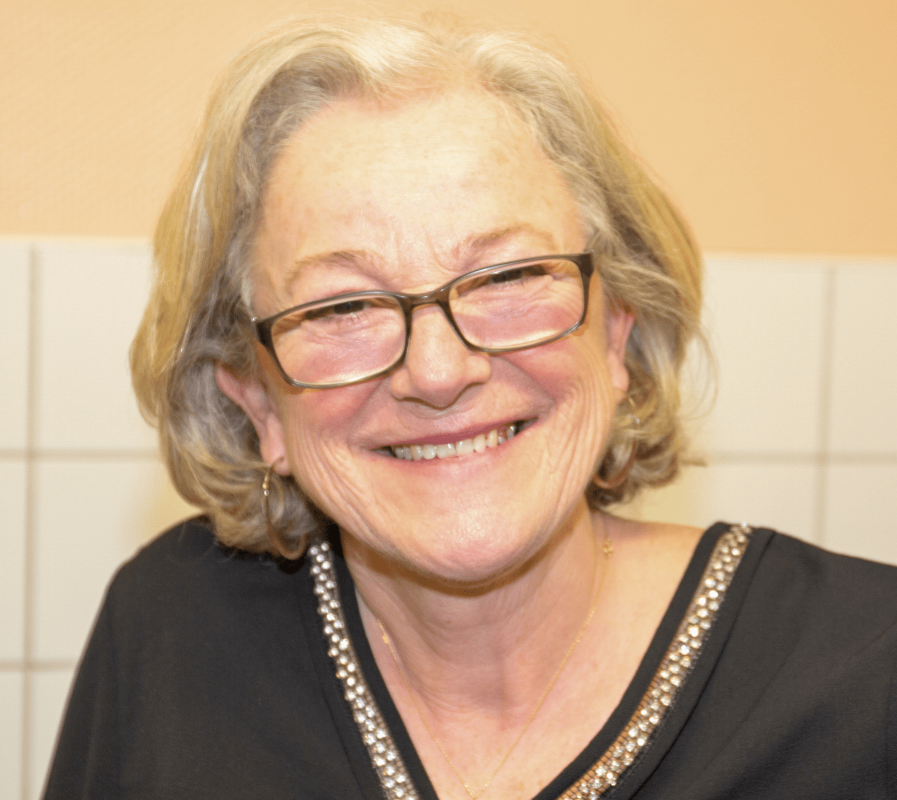
Jill is one of the hundreds of thousands of women who were forced to give up their babies for adoption in the 1950s, 1960s and 1970s. Many never even got the chance to say goodbye to their baby. Jill had never spoken about the effects of her son’s adoption in any depth with anyone until she found Family Action’s adoption support agency, PAC-UK.
She has very kindly chosen to share her story with us. To give it the space it deserves, we are publishing it in two parts. This is part two.
Everybody was telling me “You’re young. You’ll get over it and you’ll get on with your life”. The stock phrase that was used to me was “If you really love your baby you’ll give him up.
Carrying on with life after a forced adoption
You were just completely on your own from that day onwards with no support.
Everybody was telling me “You’re young. You’ll get over it and you’ll get on with your life”. The stock phrase that was used to me was “If you really love your baby you’ll give him up.”
On the outside, I carried on as if I was getting on. I gave the appearance that I had put it behind me, but on the inside, I didn’t have anyone to share my feelings with. There was so much grief. Unexpressed grief.
I worked in the civil service as I’d done pretty well at school. When I was 19, I got married – that’s 55 years ago now. My husband was studying for his PhD, so I moved to Birmingham and then later we moved to London together for two years, before he got a lectureship at Leeds university. We’ve lived there ever since.
Having lost one son there was no question about not having more children, because I dearly wanted to be a mum again.
I was 24 when I had my son and 26 when my daughter was born. I enjoyed my role and stayed at home until my daughter went to school. We just carried along as a happy family doing stuff.
Then, one day, I read an agony aunt column in the TV guide where a lady was saying she’d had a child adopted and wanted to know what she could do. She was in emotional turmoil and they informed her that there was a national contact register you could put your name on to indicate you were happy to be contacted, so I put my name down as soon as I legally could – as soon as my adopted son was 18 in 1985.
Once my son had been placed with his adoptive parents as a baby it was a requirement to sign legal documents to say you’d never have contact with your child for the rest of their life. So, to me, trying to find him would have been taboo. I thought I’d be breaking the law. Putting my name down on the register was a great relief because I’d done all I could, should he ever want to contact me. I’d left the ball in his court.
Finding each other
Nine more years passed before I received a letter saying my son was trying to trace me, last at this address in 1985, and signed it off with his full name, which his adoptive parents had changed. This was common practice in those days. It wasn’t the name I’d given him but, to be fair, it was similar. He said, “I can’t say why I want to make contact except that it’s a personal issue”, and I knew immediately who he was.
I wrote back immediately and even though I was overjoyed it also brought out a lot of grief I’d shut myself off from.
We spent ages just writing backwards and forwards, pouring our hearts out. We didn’t even speak on the phone. We took it very slowly as we just had to check where we were with things from an emotional safety perspective. Emotionally, it was very hard to cope – however joyous it was – and I suffered with PTSD [post-traumatic stress disorder].
Eventually I thought “I’m going to tape record what I’ve written and send the letter as a tape to him so he can hear my voice”. When he received that tape it was the first time he’d ever heard his mother’s voice, and he told me that he drove round the streets for hours replaying the tape. It was that stepping stone that led to him calling me.
To hear your son’s voice - his kiwi accent, his laugh. It was amazing. I couldn’t get enough of him by that stage. It was almost painful not to have met him. I just wanted more. We’d formed a really good relationship.
I found out after our reunion, he’d had issues with addiction that are not uncommon for some adopted people. A big part of that was from his attachment issues and issues with his identity.
He said it was important to know who he really was, where he’d come from.
His adoptive family had emigrated to New Zealand when he was six, so he was completely cut off from his roots. His adoption was a closely held issue within his immediate family, and something rarely talked about. He’d had a lot of counselling, and it was his counsellor who told him about the UK contact register.
I booked a ticket to meet him in New Zealand almost five months since our first point of contact. He was in the Royal New Zealand Airforce and lived in Barracks. I had a motel room. We spent so much time just talking and establishing that special connection – him taking me to his special places. The relationship we had was amazing.
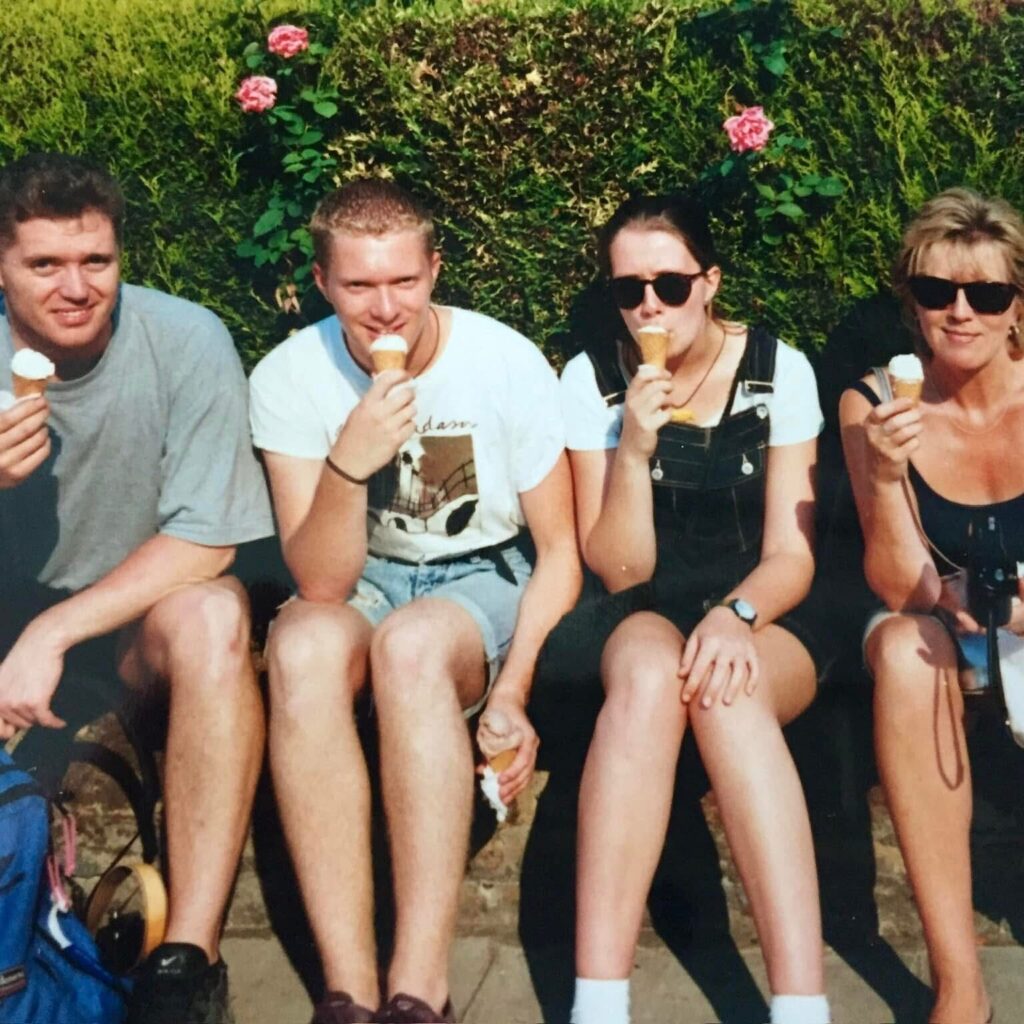
For two weeks I spent every day with him and even got to share his 27th birthday. I had to travel back at Christmas for my family here, and I can remember sitting on the plane after we’d said our long goodbyes and I was sobbing my eyes out. He told me he sat in his car for hours, gathering his thoughts.
I felt like I’d lost him all over again. It was like missing somebody so much that it hurts.
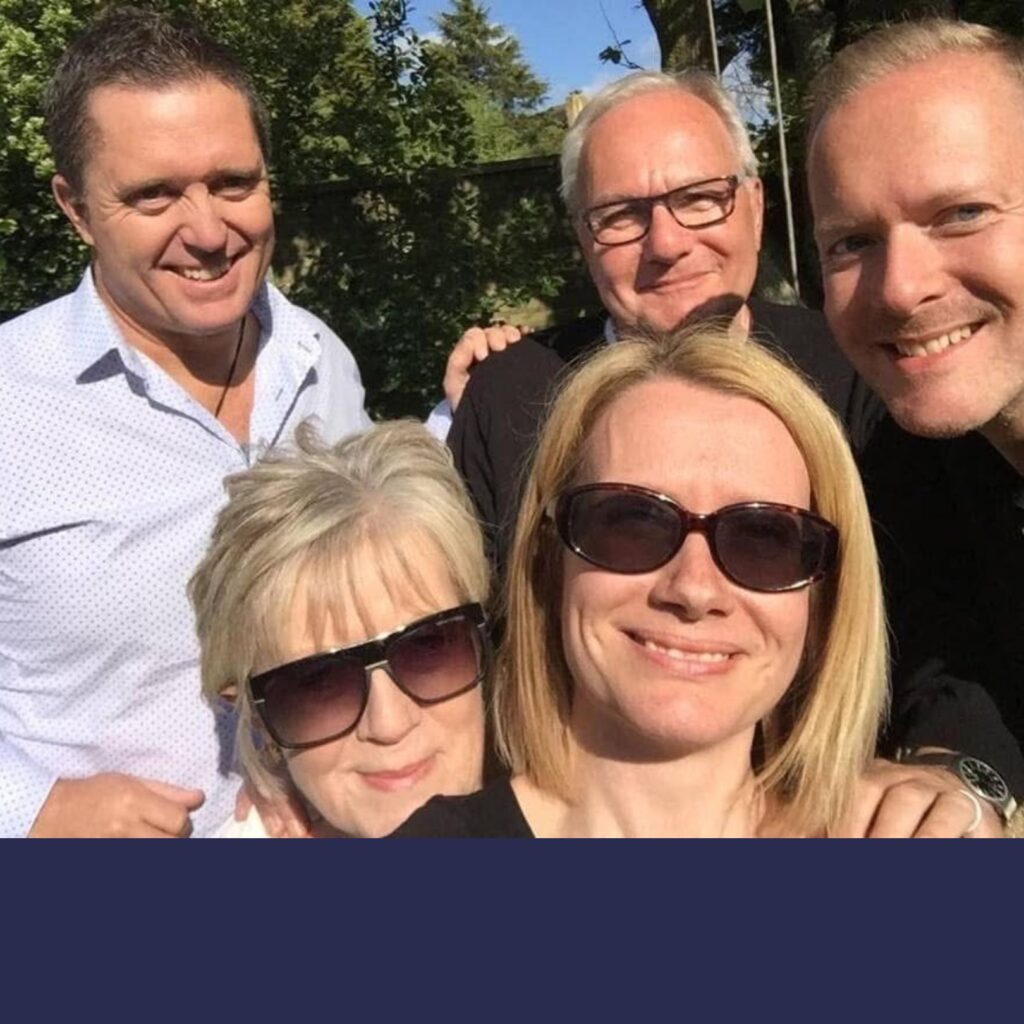
So, the first few years of our reunion I vowed that I wanted to see him once a year. I went on my own quite a few times then often with my husband and then with my other son and daughter and their partners.
My son is now married and he’s got two children. A few years ago, he managed to trace two of his paternal siblings, so that was also a special connection – his two biological families meeting up together was hugely beneficial. It really did feel like we’d almost come full circle and reinforced the relationship. And now we’ve all got a long-distance relationship that’s very strong. It’s more of an emotional, spiritual thing in a way. Our love for one another is incredible.
Looking back what I didn’t expect was that it wasn’t until the reunion that I went to pieces, which I now know isn’t unusual.
Finding support and space to talk
I don’t know how I found out about After Adoption Yorkshire, which is now PAC-UK at Family Action, but until I’d been with the people in the support groups, I’d never spoken about the effects of my son’s adoption in any depth with anyone. It’s good to have people to talk to as it could have been difficult with my other children because I didn’t want them to think I’ve been an emotional wreck because I haven’t, but I didn’t want to risk putting too much of a burden them.
Adoption for so many birth parents and adoptees inevitably leaves scars – some we can hope to heal, sadly others might take a life-time to bear. It is still painful. We can never change the past, but hopefully with the involvement of PAC-UK at Family Action we can be instrumental in supporting all those affected and those yet to come, and in changing adoption practice and policy.
PAC-UK Advice Line
Staffed by qualified and experienced PAC-UK counsellors/social workers who can provide advice and information on all aspects of adoption and other forms of permanent care.
Telephone: 0300 1800 090
Email: [email protected]
Open: Monday, Tuesday, Wednesday & Friday: 10.00am-4.00pm; Thursday: 10.00am-7.30pm